Air-breathing plasma thruster for CubeSats
Satellites in very low Earth orbit lose altitude quickly because of atmospheric drag, which limits their lifetime. Air-breathing electric propulsion (ABEP) turns that problem into a resource: the thruster collects the thin atmosphere and uses it as propellant.
Context
Very low Earth orbit (VLEO) is attractive for observation and communication, but residual atmospheric drag shortens a satellite’s life unless it carries propellant to compensate. For a CubeSat, onboard propellant is a severe constraint. ABEP proposes to ingest the residual atmosphere itself and ionize it to produce thrust.
Problem statement
Can a thruster combining a Helicon plasma source and an electron cyclotron resonance (ECR) source work within the size and power budget of a CubeSat?
Methodology & approach
The feasibility study is organized around three strands of work:
- Modeling the plasma physics of the Helicon and ECR sources.
- Running simulations.
- Comparing three RF antenna designs that create and heat the plasma.
Results & findings
Project in progress. Results will be added here as the study advances.
Related projects
A shoulder implant that stays in place
Redesigning a glenoid implant to resist loosening, with a biomechanics institute.
DateSep 2026 – presentTeam7-person teamDetail →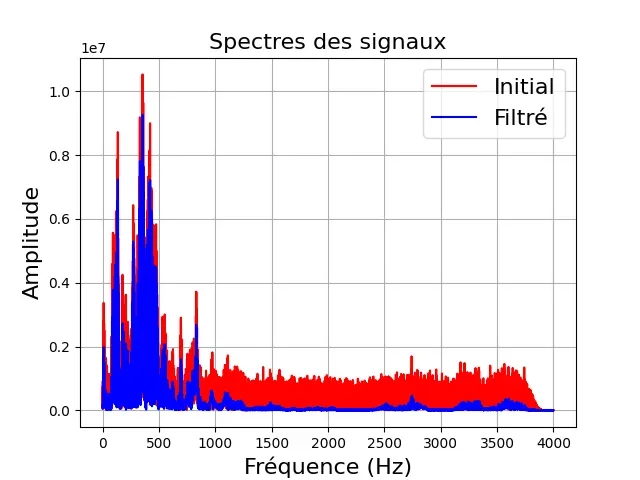 A4CompletedTIPE research project
Recovering a voice from a noisy recording
I compared digital filters with spectral subtraction, tuned the method to remove its artifacts, then made it run live on a microphone feed.
DateSep 2024 – Jul 2025Team2-person teamDetail →